

Schedule
Each side of a card has its own schedule.
“la ciudad → city” and “city → la ciudad” are two different memories. schedules each one on its own, just before you'd forget it.
With regular practiceWithout practice
AI flashcards · 100+ languages · Web & Android
It comes back finished — translation, an example, audio and a picture — and the app decides when you review it.

No credit card. Or learn right in your browser.

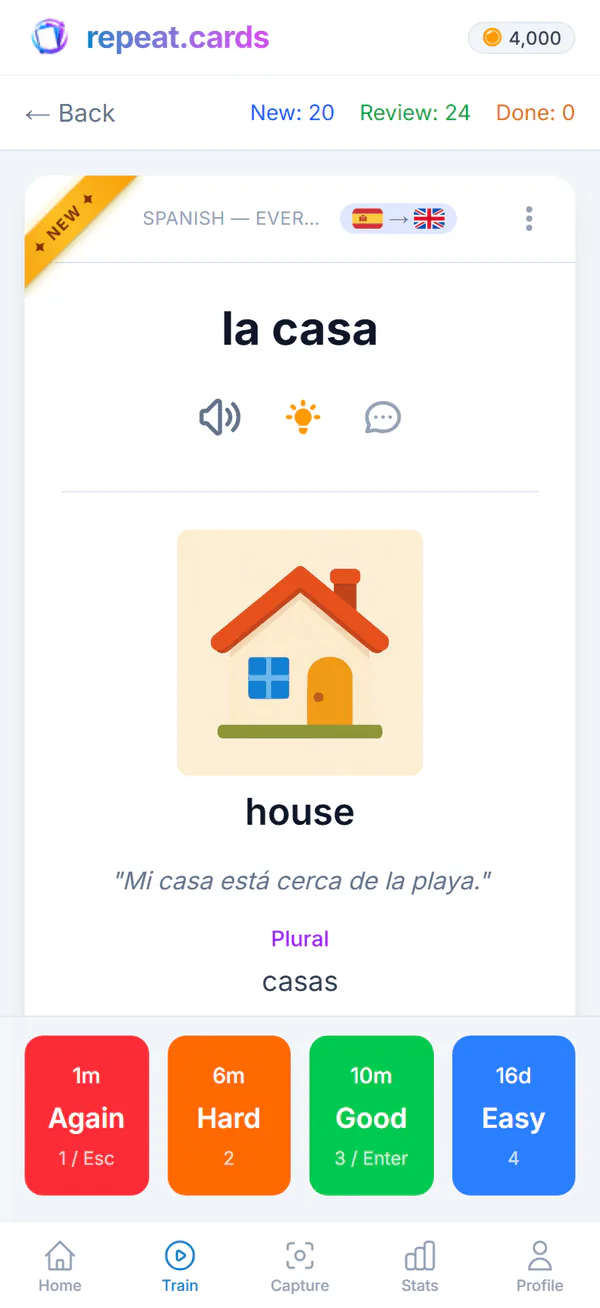
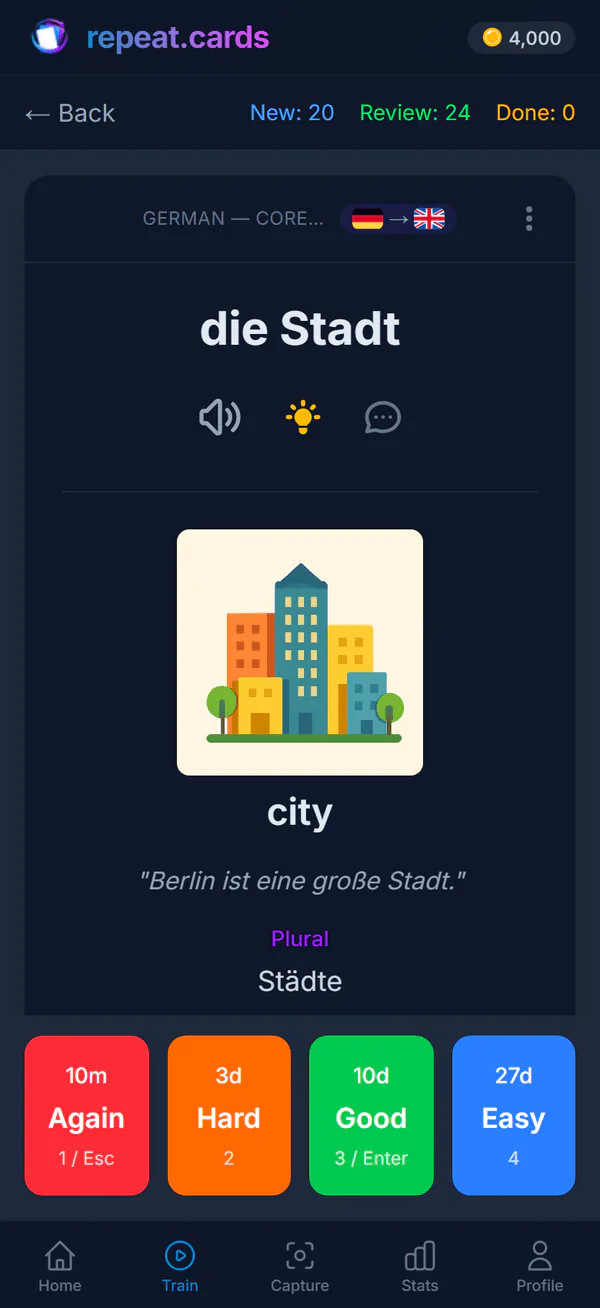
One word in, a whole card out. Then ask about it, and train it.
You type
The card comes back
“La ciudad tiene muchos parques.”
The city has many parks.

Plural
las ciudades
Memory hook: “La ciudad” sounds roughly like “lah, see-you, Dad!” Picture someone calling to Dad as he heads into the city: “See you, Dad!”
Ask about the word
Why 'la' if it doesn't end in -a?
Spanish nouns ending in -dad are usually feminine, even though they don’t end in -a. So it’s la ciudad (“the city”), plural las ciudades.
Other examples: la verdad (“the truth”) and la universidad (“the university”).
Then you train it
city
Word
Plural
Mistakes are marked letter by letter - a missing accent counts.
Three things most flashcard apps don't do.
Schedule
“la ciudad → city” and “city → la ciudad” are two different memories. schedules each one on its own, just before you'd forget it.
Grammar
Articles, plurals and verb conjugations are generated with the card and checked when you train - ready-made for Spanish, German, French, Portuguese, Italian, Russian and English.
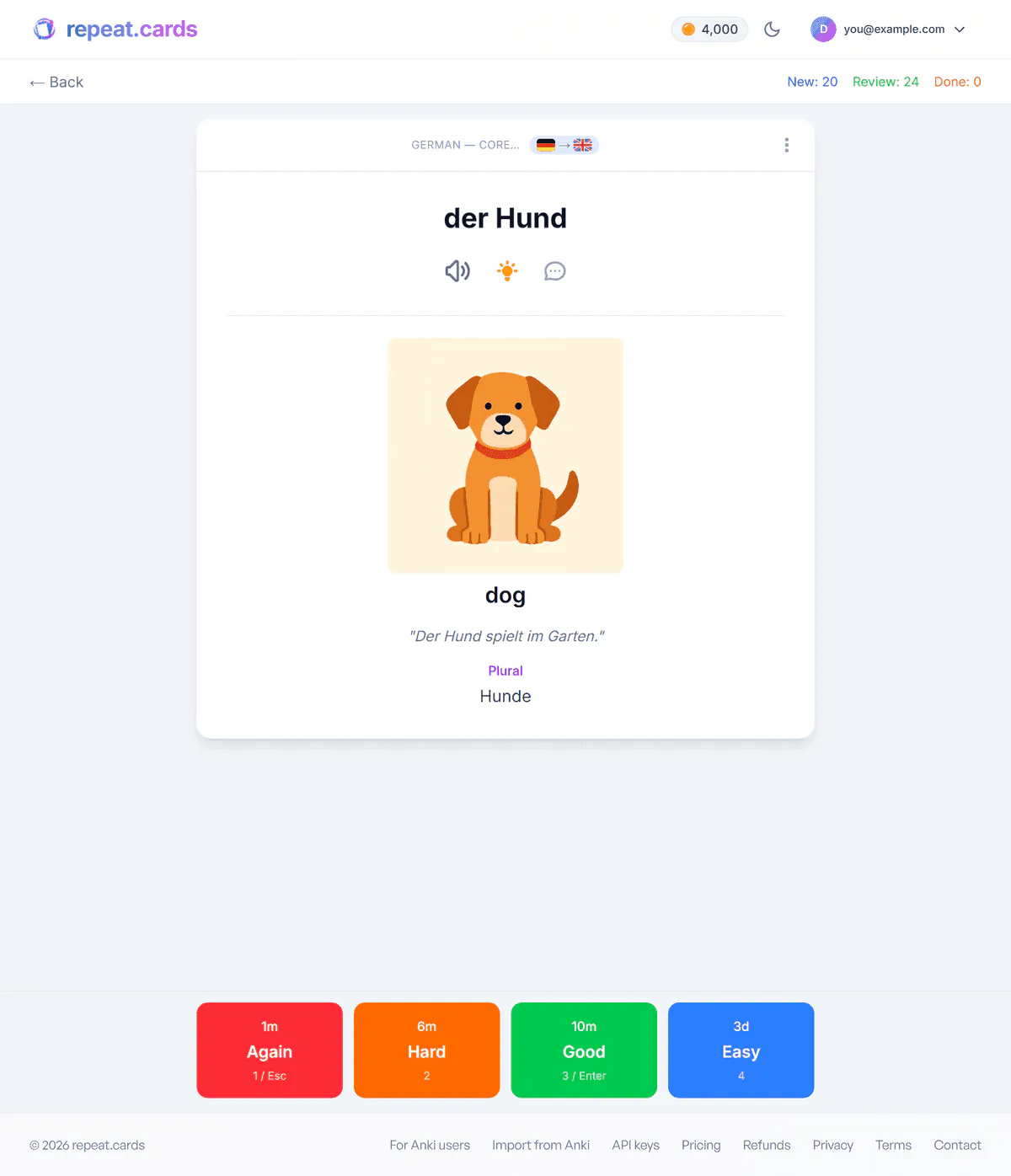
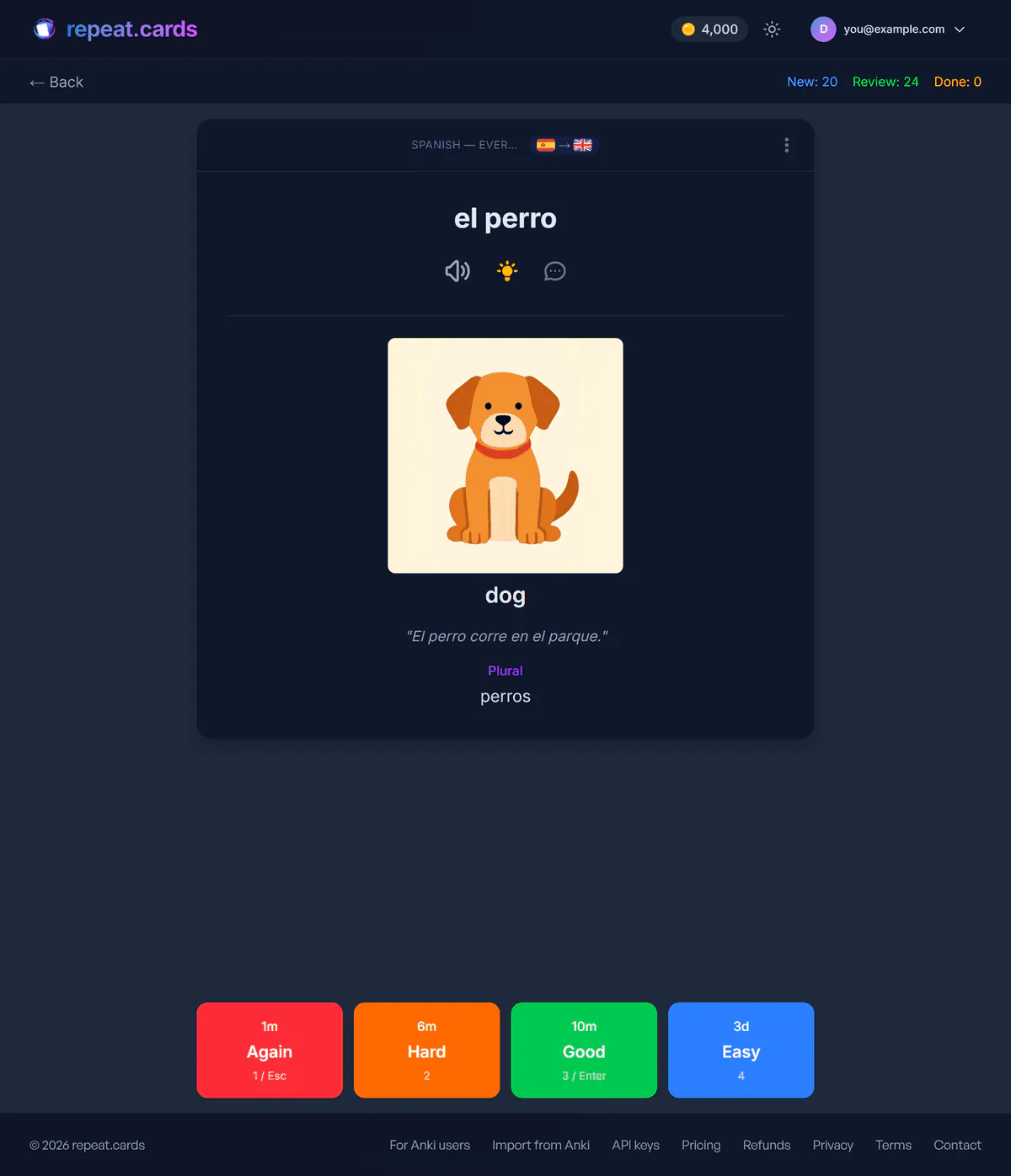
Answers
No multiple choice. Your answer is corrected letter by letter: capitalization and punctuation don't count against you, a missing accent does.
Coffee with milk
 AI flashcardsRead more →
 Ask about a wordRead more →
 Capture wordsRead more →
 Review forecastRead more →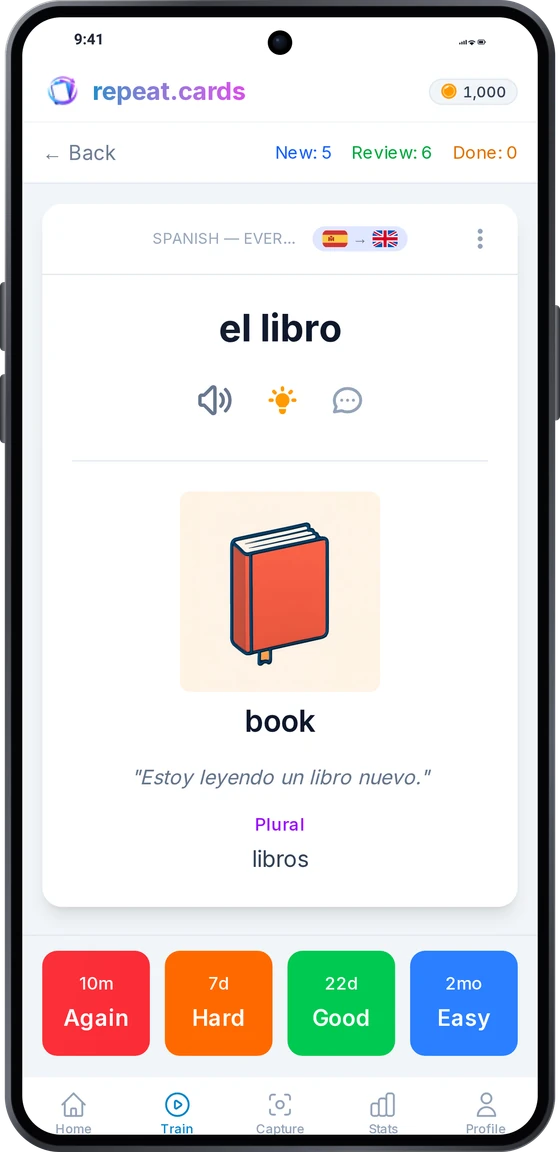
 Android & iOSAndroid →iOS →
 AI settings, or your own keysRead more →
Free. The AI runs on coins, and you start with some. See the prices →
Start with one deck. Free, no credit card.


